
Free written scope consultation - allowances, timeline, and change-order rules on paper before a single trade is scheduled

 Before
 After
After Before
 After
After Before
 After
AfterQuartz & Granite Countertops in Miami, FL
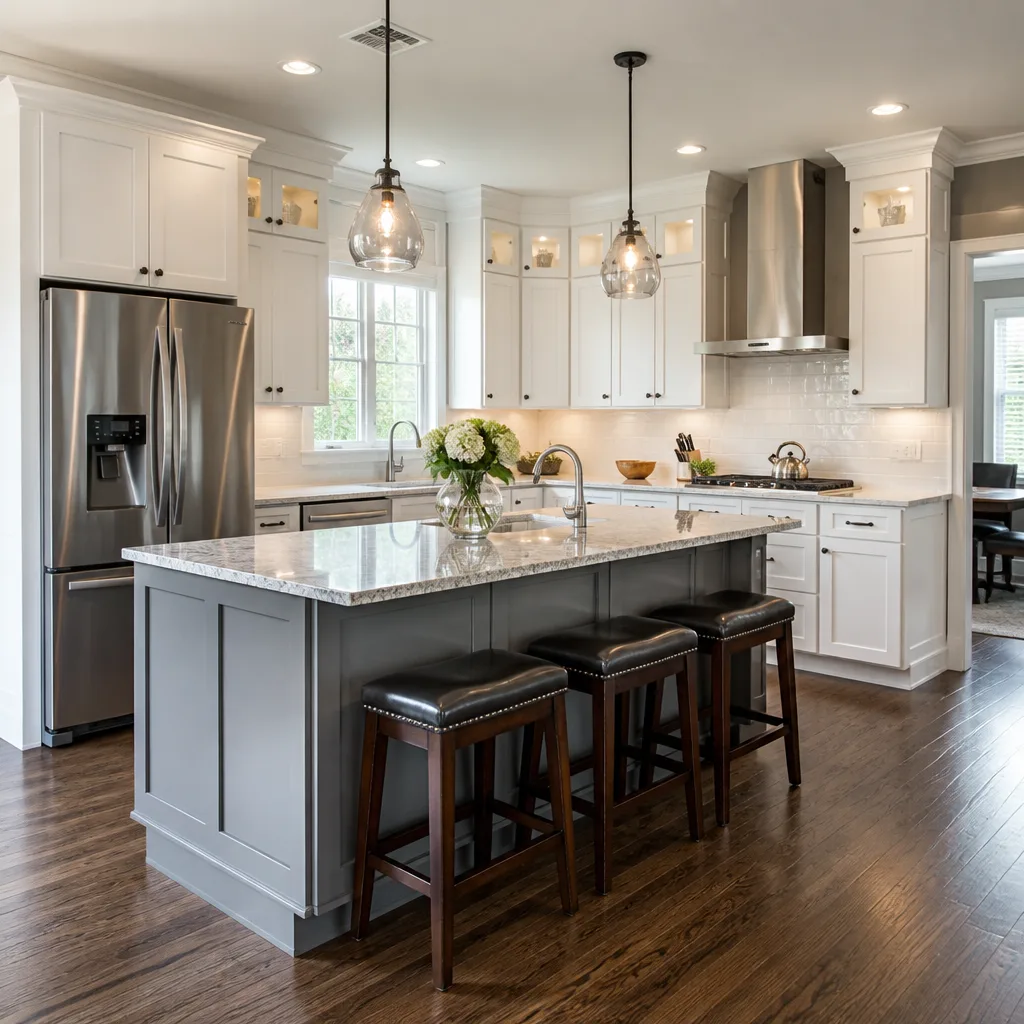
Quartz and granite countertop installation in Miami typically runs $65 to $145 per square foot installed, depending on material, edge profile, and kitchen layout. Most full kitchen countertop replacements in Miami homes come in between $3,200 and $9,800 total, with the price locked in writing before Rowan Construction Group Miami cuts a single template. Call (786) 321-4970 to get that number on paper.
Miami kitchens take a beating. High humidity, salt air near the bay and the barrier islands, and the kind of daily cooking that comes with extended family households – these conditions separate a properly installed countertop from one that starts failing at the seams within two years. The substrate prep, the adhesive spec, and the seam placement all matter more here than they would in a dry inland climate, and those are the details this page covers.
This page is part of our Kitchen Remodeling in Miami service. If you’re also rethinking cabinets, layout, or fixtures alongside countertops, that’s where to start.
When You Need Quartz & Granite Countertops
- Visible cracks or chips in existing stone. A hairline crack in granite that runs through a seam is structural, not cosmetic. In Miami’s humidity, water infiltrates that crack and attacks the substrate underneath – typically particleboard or plywood that doesn’t respond well to prolonged moisture.
- Countertops that move when you press on them. Countertop lift – where the slab pulls away from the cabinet box slightly – is more common in Miami than homeowners expect. It usually signals adhesive failure, often caused by the temperature cycling between air-conditioned interiors and hot, humid outdoor air.
- Laminate or tile that’s reached the end of its life. Laminate swells at the edges. Grout between tile countertop joints becomes a permanent harbor for bacteria regardless of how well you clean it. When either material has hit that point, resurfacing is a short-term fix and full replacement is the honest answer.
- A kitchen remodel that needs the countertop to keep up. New KraftMaid or Wellborn cabinets at a Coral Gables or Coconut Grove price point deserve a countertop that matches them in durability and appearance. A mismatched surface will undercut the entire project.
- Pre-sale preparation in a competitive Miami market. Buyers in Brickell and South Miami walk through dozens of listings. Outdated countertops are the detail that gets called out in showing notes. Replacing them before listing is one of the few renovation line items with a documented return at resale.
- Damage from a prior plumbing repair or appliance swap. A countertop cut for a new sink or cooktop – done without proper template work – can leave stress fractures in granite that spread over months. If you’ve had a plumber or appliance crew work around your countertop in the last year and notice new cracks, get it looked at before it reaches the substrate.
Our Quartz & Granite Countertops Process
- In-home measurement and written estimate – before anything else. A Rowan crew member visits the kitchen, takes precise field measurements, and documents the existing substrate condition with photographs. Under Clause 1 of the Haven Standard, a flat written price with a defined scope is delivered before any work starts. That price doesn’t move unless you add scope – and no scope addition proceeds without a signed change order. Estimates are free, and we’ll review any competing written quote line by line at no charge.
- Material selection from vetted supply partners. We source from Cambria and Caesarstone, two manufacturers with consistent slab thickness tolerances and documented warranty terms. You’ll see physical samples and, where the project budget justifies it, visit a slab yard to choose the specific piece – not a representative photo of a representative slab. Edge profiles, finish (polished, honed, leathered), and sink cutout style are confirmed in writing before the slab is templated.
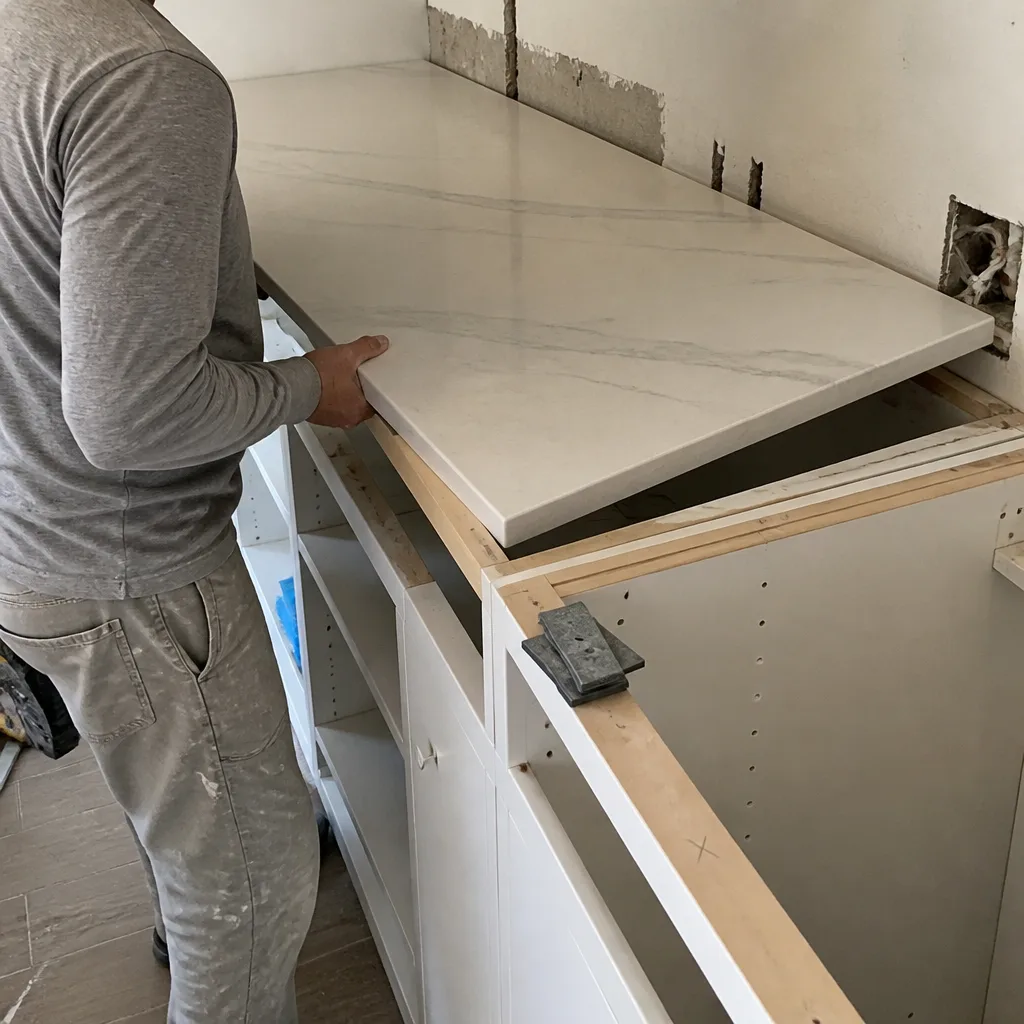
- Digital templating for precise fabrication. After demo and cabinet confirmation, a digital template is cut from the actual cabinet run – not from the original measurement. Miami kitchens in older construction, particularly in areas like Wynwood or Little Havana where homes were built in the 1950s and 1960s, rarely have walls that are perfectly square. Templating to the actual cabinet eliminates gaps and uneven reveals before the stone is cut.
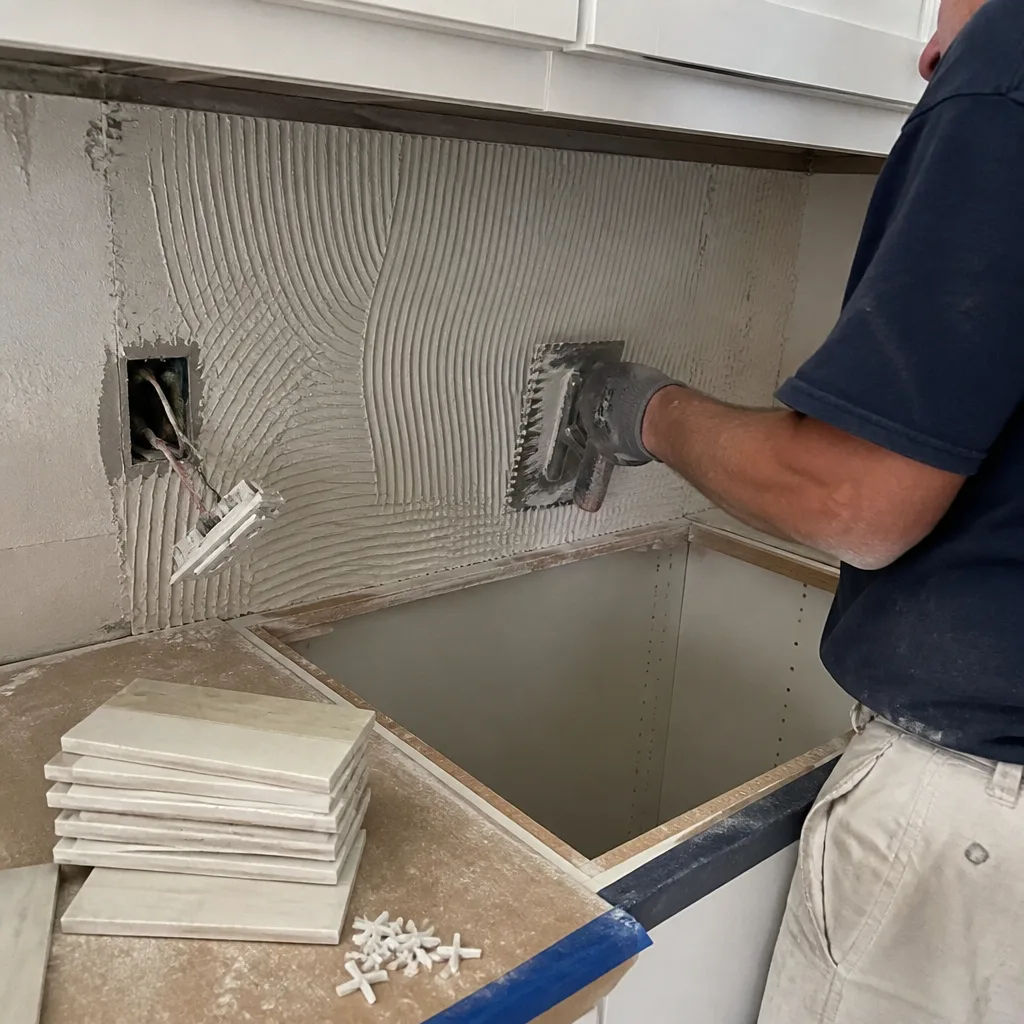
- Substrate inspection and prep. Once the old countertop is off, the cabinet box tops are inspected for moisture damage, level, and structural integrity. If we find plywood that’s delaminated or a cabinet run that’s out of level by more than a quarter inch, that’s documented in a photo and addressed before the new stone goes down. Shimming and minor cabinet repair are included in the scope where noted; significant cabinet work is quoted as a change order before we touch it.
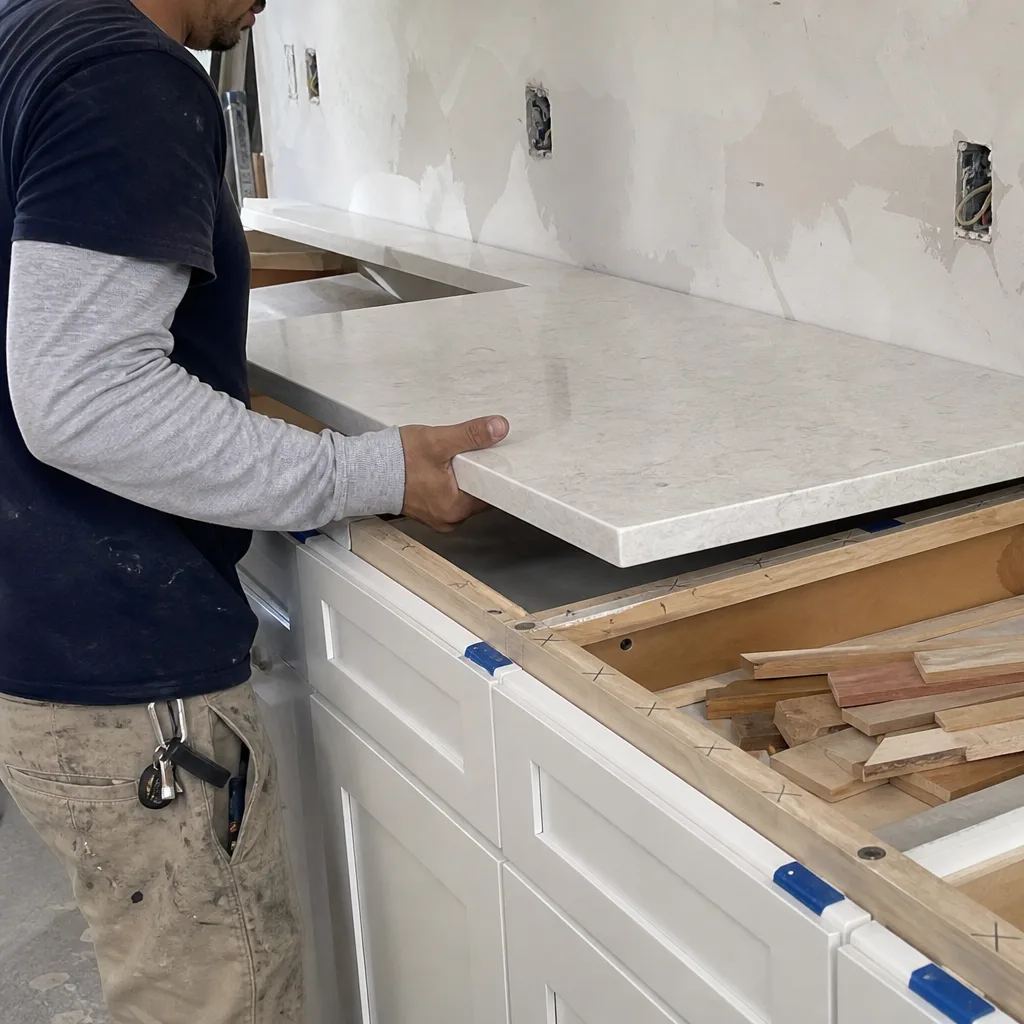
- Installation with silicone and mechanical support where required. Slabs are set with a color-matched silicone adhesive rated for the humidity conditions common in Miami. Spans longer than 24 inches without cabinet support beneath them get corbel brackets specified to the slab thickness – a detail that matters especially with thinner quartz profiles. Seams are placed away from high-stress points like sink cutouts and cooktop openings.
- Documented final walkthrough and photo record. Every Rowan visit ends with a documented photo record – seam placement, edge finish, sink cutout, and under-cabinet adhesive line. You receive this as a standard deliverable, not an add-on. The 365-Day Done Right Promise covers the installation: if something isn’t right within the first year, we make it right. That’s in writing on every contract.
BeforeAfterQuartz & Granite Countertops Pricing in Miami
Countertop pricing in Miami runs higher than national averages for two reasons: material transport costs to South Florida, and the skilled labor required to template and install correctly in homes with non-standard layouts and high ambient humidity. The ranges below reflect what Rowan Construction Group Miami actually quotes in this market – not what a national cost estimator publishes for a generic suburban kitchen.
| Material / Scope | Typical Installed Range (Miami) |
|---|---|
| Entry-level quartz (standard colors, simple edge) | $65 – $85 per sq ft installed |
| Mid-range quartz – Caesarstone or comparable | $85 – $110 per sq ft installed |
| Premium quartz – Cambria with patterned design | $110 – $145 per sq ft installed |
| Granite – moderate movement, standard finish | $75 – $105 per sq ft installed |
| Granite – high-movement slabs, custom edge profile | $105 – $135 per sq ft installed |
| Backsplash in matching material (per linear ft) | $45 – $85 per linear ft installed |
| Typical full Miami kitchen (40-65 sq ft of countertop) | $3,200 – $9,800 total |
What drives the number up or down
- Square footage and layout complexity. A galley kitchen with one straight run costs less to template and install than an L-shaped or U-shaped kitchen with an island. Each inside corner is a seam decision.
- Edge profile. A standard eased or beveled edge adds nothing to the price. A full bullnose, waterfall edge down a cabinet side, or a mitered edge for a thick-look profile adds both material and labor.
- Sink type and cutout. An undermount sink requires a clean, polished cutout and additional sealing. A farmhouse apron-front sink requires cabinet modification first, which is quoted separately.
- Substrate condition. If the existing cabinet tops are damaged, unleveled, or require reinforcement for a heavier slab, that work is identified at the estimate visit and priced before the project starts.
- Slab selection. Choosing a specific slab at a yard – particularly for granite, where each piece is unique – occasionally means premium pricing for unusual material. That’s documented in the quote before the slab is reserved.
Every Rowan estimate is a flat written price with a defined scope. If you have a competing estimate in hand, bring it – we’ll go through it line by line at no charge and tell you what’s in it and what isn’t. Call (786) 321-4970 to schedule the estimate visit.
Quartz vs. Granite: Which One Makes Sense for a Miami Kitchen
Both materials work well in South Florida, but they behave differently and suit different households. This isn’t a preference question – it’s a use-case question.
Quartz is an engineered stone: ground quartz crystals bound with resin, pressed into consistent slabs. Because the resin fills the pore structure completely, quartz is non-porous and requires no periodic sealing. In a Miami household where the kitchen sees daily cooking, high humidity, and potential splashes of citrus or coffee, that matters practically. Caesarstone and Cambria both offer a 15-25 year limited warranty on the material itself, which is the kind of documentation worth asking for in writing. The tradeoff: quartz is not UV-stable. Direct sunlight through an unshaded window will discolor a quartz surface over time – a relevant detail in Miami homes with large south or west-facing kitchen windows.
Granite is quarried stone, and each slab is genuinely unique. The natural variation – veining, crystal patterns, color movement – is either the reason to choose it or the reason to avoid it, depending on your design intent. Granite is harder and more heat-resistant than quartz and is not UV-sensitive. It does require sealing at installation and again roughly every two to three years, depending on the stone’s porosity and how heavily the kitchen is used. Skipping sealing in a humid Miami environment accelerates staining in the pore structure. We document sealing at the time of installation and can advise on the appropriate interval for the specific stone selected.
If the kitchen gets heavy daily use, has young children, and the countertop needs to be low-maintenance: quartz. If the priority is natural stone appearance, heat resilience, and a surface that will outlast most of what gets placed on it: granite, with a consistent sealing schedule.
Miami-Specific Conditions That Affect Installation
Contractors who operate primarily outside South Florida sometimes underestimate what Miami’s climate does to countertop installations. A few conditions worth naming plainly:
Humidity and adhesive performance. Standard adhesives used in drier climates can fail faster in Miami’s ambient humidity, especially in kitchens that are not consistently air-conditioned. Rowan specs silicone adhesives rated for high-humidity environments and verifies the cabinet substrate is dry before any slab is set.
Older home construction in urban neighborhoods. Kitchens in Coconut Grove, Little Havana, and parts of Coral Gables and Hialeah were often built in the 1950s and 1960s, before countertop substrate standards were consistent, which is why Small & Partial Kitchen Remodels are common in these neighborhoods. It’s not uncommon to remove an old laminate countertop in one of these homes and find 60-year-old wood sheathing underneath that needs reinforcement. We document what we find before we do anything about it.
Salt air in coastal locations. For homes in Miami Beach, Key Biscayne, and bayside properties in Brickell and Edgewater, salt air accelerates surface oxidation on metal fixtures and can affect grout and adhesive if the kitchen has any exterior-facing penetrations. It doesn’t change the countertop material choice in most cases, but it’s a factor in how the sink and faucet connections are sealed.
FAQs – Quartz & Granite Countertops
How long does a quartz or granite countertop installation take in Miami?
Most countertop installations in Miami take two to three days from demo to final seal: one day to remove the existing surface and prep the substrate, one day for installation once the fabricated slabs arrive, and a shorter third visit for caulking, sink reconnection, backsplash and flooring tie-ins, and final documentation. The fabrication lead time – cutting and finishing the slab to the digital template – runs five to ten business days from the time the template is taken. We schedule the template date during the estimate visit so you have a realistic timeline in writing before committing to anything.
Does quartz or granite require a permit in Miami?
Countertop replacement in Miami-Dade County does not typically require a building permit when it’s a like-for-like surface swap without structural changes to the cabinet run. If the project includes moving a sink drain, adding an island that requires new electrical or plumbing rough-ins, or altering the cabinet layout, permits are required for those trades. Rowan handles permitting where it’s needed – and if you’re not sure whether your scope requires one, that’s a question we answer at the estimate visit, not after the work starts.
Is quartz or granite better for resale value in Miami?
Both materials are consistently listed as buyer preferences in the Miami market, and both outperform laminate and tile in buyer perception. Quartz has a slight edge in condo and new-construction comps because of its low maintenance profile. Granite tends to perform well in single-family homes in Coral Gables, South Miami, and Pinecrest where buyers expect natural stone. The honest answer is that the quality of the installation – clean seams, level surface, properly finished edges, and cabinet integration – matters more to buyers than the specific material choice. Call (786) 321-4970 and describe your kitchen; we can give you a grounded read on what makes sense for your neighborhood and price point.
What happens if the slab cracks during installation or within the first year?
If a crack results from the installation itself – a seam placed incorrectly, a cutout that wasn’t adequately supported, or improper adhesive application – that’s covered under the 365-Day Done Right Promise, at no cost to you. If a crack results from a documented external impact after installation, that’s a different conversation, but we start by looking at the photo record from the installation visit to establish the baseline condition. The photo documentation exists precisely for this kind of situation – so there’s no dispute about what the countertop looked like when we left.
Key Takeaways
- Installed countertop pricing in Miami ranges from $65 to $145 per square foot, with most full kitchens landing between $3,200 and $9,800 total.
- Every Rowan quote is a flat written price with a defined scope – delivered before any work starts and before any material is ordered.
- No scope change proceeds without a signed change order. That’s not a policy; it’s Clause 1 of the Haven Standard.
- Quartz (including Caesarstone and Cambria) requires no sealing and is the lower-maintenance choice. Granite is harder and UV-stable but needs sealing every two to three years in Miami’s humidity.
- The 365-Day Done Right Promise covers the installation in writing. If it’s not right, Rowan makes it right.
- Older Miami-area homes – particularly in Coconut Grove, Little Havana, and Hialeah – often have substrate issues under existing countertops. We document what we find before we act on it.
Get a Written Price for Your Miami Kitchen Countertops
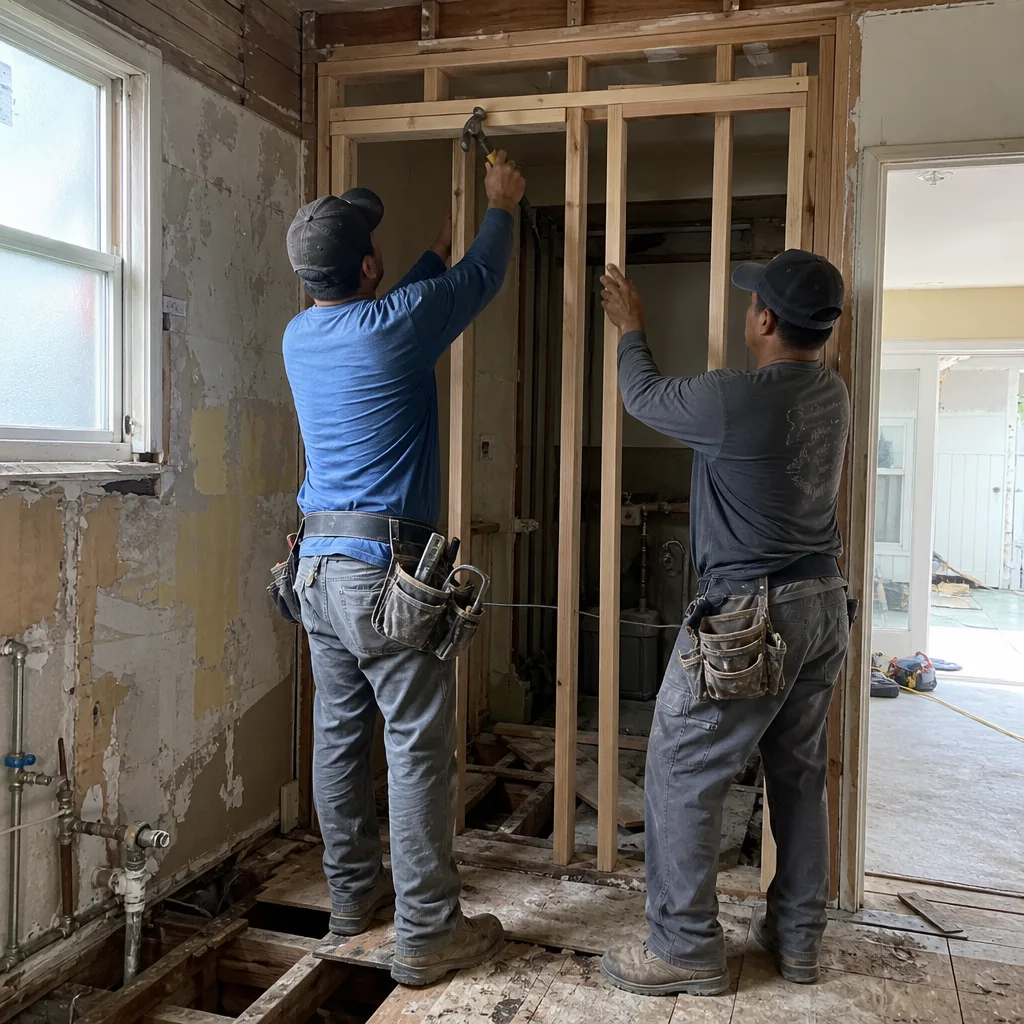
Rowan Construction Group Miami has been putting countertop prices in writing since 2007, across more than 4,000 projects in Miami and the surrounding area. We source from Cambria, Caesarstone, and other vetted suppliers. Our crews are background-checked and uniformed. A live person answers at (786) 321-4970 around the clock.
If you have a competing estimate, bring it. We’ll review it line by line at no charge and tell you exactly what it includes and what it doesn’t. If you’re starting from scratch, the estimate visit is free and the price we hand you is the price. To get started with your home renovation or to schedule an estimate for new quartz or granite countertops in Miami, call (786) 321-4970 today.
Written by Grant Rowan, Owner at Rowan Construction Group Miami, serving Miami.