
Last updated September 22, 2026
Free written scope consultation - allowances, timeline, and change-order rules on paper before a single trade is scheduled



 Before
 After
After Before
 After
After Before
 After
AfterKitchen Remodeling Maintenance Checklist for Miami Homeowners
Stainless steel cabinet hardware in a Miami kitchen within three blocks of the water can show surface corrosion in under 18 months - a problem that disappears entirely when 316-grade marine stainless replaces standard 304-grade at roughly $4 more per pull. That $4 difference is the entire story of kitchen maintenance in this city: small material choices made during remodeling, or corrected in the first year, determine whether your kitchen ages gracefully or starts costing you money by month fourteen. In this Complete Guide to Construction in Miami, we’ll walk through a month-by-month first-year inspection schedule, the specific material grades that survive salt air, and the documentation habits that protect your warranty - all grounded in what we’ve observed across 4,000-plus projects since 2007.
Quick Answer
A kitchen remodeling maintenance checklist for Miami homeowners should include monthly inspections of grout seals and under-sink moisture, quarterly checks of cabinet alignment and range hood ventilation, and annual verification of hardware corrosion status - with material specifications (marine-grade stainless, PVD finishes, humidity-rated exhaust fans) chosen for salt-air and high-humidity conditions at the outset. Proper maintenance can extend the functional life of a Miami kitchen by 8-12 years compared to identical materials maintained on a generic schedule.
Table of Contents
- Month-by-Month First-Year Inspection Schedule
- Countertop Materials That Survive Miami Humidity
- How to Verify Your Range Hood Actually Vents Outside
- Hardware Grades and Finish Codes for Salt-Air Kitchens
- Building a Warranty-Preserving Maintenance Log
- What Prevention Costs Versus Replacement
- Common Mistakes to Avoid
- When to Call a Professional
BeforeAfterMonth-by-Month First-Year Inspection Schedule
The first year after a kitchen remodel is when installation stresses reveal themselves and when Miami’s climate begins its accelerated testing of every joint, seal, and surface. We’ve seen properly built kitchens in Coral Gables and Coconut Grove show their first maintenance needs at month three, while kitchens in inland Doral or Kendall often stretch to month six before similar symptoms appear. The difference is salt load in the air, not humidity alone.
Months 1-3: Settlement and Curing Phase
New cabinets settle into their shimmed positions. Caulk cures to its final elasticity. Grout reaches full hardness. This is when you catch the problems that become expensive later.
- Check cabinet door alignment: Open and close every door and drawer twice weekly for the first month. Soft-close mechanisms, especially on heavier Kitchen Remodeling in Miami installs with solid-panel doors, can pull hinges out of plumb if the cabinet box shifts on its shims. Mark misaligned doors with painter’s tape and note the date.
- Inspect caulk joints at backsplash and countertop: Look for shrinkage gaps at the sink-deck seam and where backsplash meets counter. In Miami’s humidity, silicone caulk can skin over before fully curing if the AC cycles aggressively. A gap wider than a credit card edge needs re-caulking before water finds it.
- Test under-sink moisture: Run your hand along the cabinet floor beneath the P-trap and disposal. Any dampness, even slight, indicates a connection that will worsen. We document this with photos on every visit - you should too.
- Verify exhaust fan operation: Hold a tissue to the hood intake while running on high. It should flatten firmly against the filter. If it flutters or falls, airflow is insufficient for Miami’s moisture load.
Months 4-6: First Humidity Stress Cycle
Miami’s wet season arrives in earnest. Cabinetry absorbs ambient moisture. Grout pores open slightly. This is when material quality differences become visible.
- Grout seal test: Sprinkle water on backsplash grout. If it beads, the seal is intact. If it darkens the grout, reseal immediately - unsealed grout in a Miami kitchen will harbor mold within two wet seasons. For cementitious grout, we specify a fluoropolymer sealer (not silicone-based) at installation; reapply at month six if the water test fails.
- Check for cabinet face-frame gaps: Humidity causes wood and MDF to expand at different rates. A face-frame joint that was tight at installation may now show a hairline crack. This is normal in the first year but should not progress past 1/32 inch. Wider gaps indicate inadequate acclimation before installation, a problem we prevent with a 72-hour site conditioning period under The Haven Standard.
- Inspect toe-kick and plinth for moisture staining: Mopping and minor spills accumulate here. In Miami’s humidity, standing moisture under a toe-kick won’t evaporate overnight. Lift the kick plate if it’s removable, or shine a flashlight at floor level.
Months 7-9: Deep Summer Verification
The combination of 90-degree days and air-conditioned interiors creates condensation stress on exterior-facing walls. Kitchens on the east side of Miami homes, catching morning sun after cool nights, show this most acutely.
- Re-test all caulk joints: Temperature swings harden caulk faster in year one. Replace any joint that has lost flexibility - press with a fingernail; it should indent slightly and rebound.
- Check refrigerator and dishwasher leveling: Appliance vibration walks units on vinyl or tile floors. A refrigerator tilted backward strains the water line connection. A dishwasher out of level won’t drain completely, leaving standing water that breeds odor in Miami’s heat.
- Verify garbage disposal seal and flange: The vibration-disposal combination loosens the sink flange over time. Rock the disposal gently; any movement means the lock ring needs tightening before the seal fails.
Months 10-12: Annual Baseline Documentation
Everything you observe now becomes your benchmark for year two. Photograph every surface, note every condition, and you’ll spot changes early for the life of the kitchen.
- Photograph hardware condition: Compare to your move-in photos. Any pitting, discoloration, or stiffness in operation gets documented. This is your evidence for warranty claims or material-grade upgrades.
- Test all GFCI outlets: Kitchen circuits take abuse from small appliances. Press the test button monthly; replacement is $15-$25 per outlet if you catch failure early, versus potential code violation or hazard if you don’t.
- Review your maintenance log: See the dedicated section below on what this document should contain.
Countertop Materials That Survive Miami Humidity
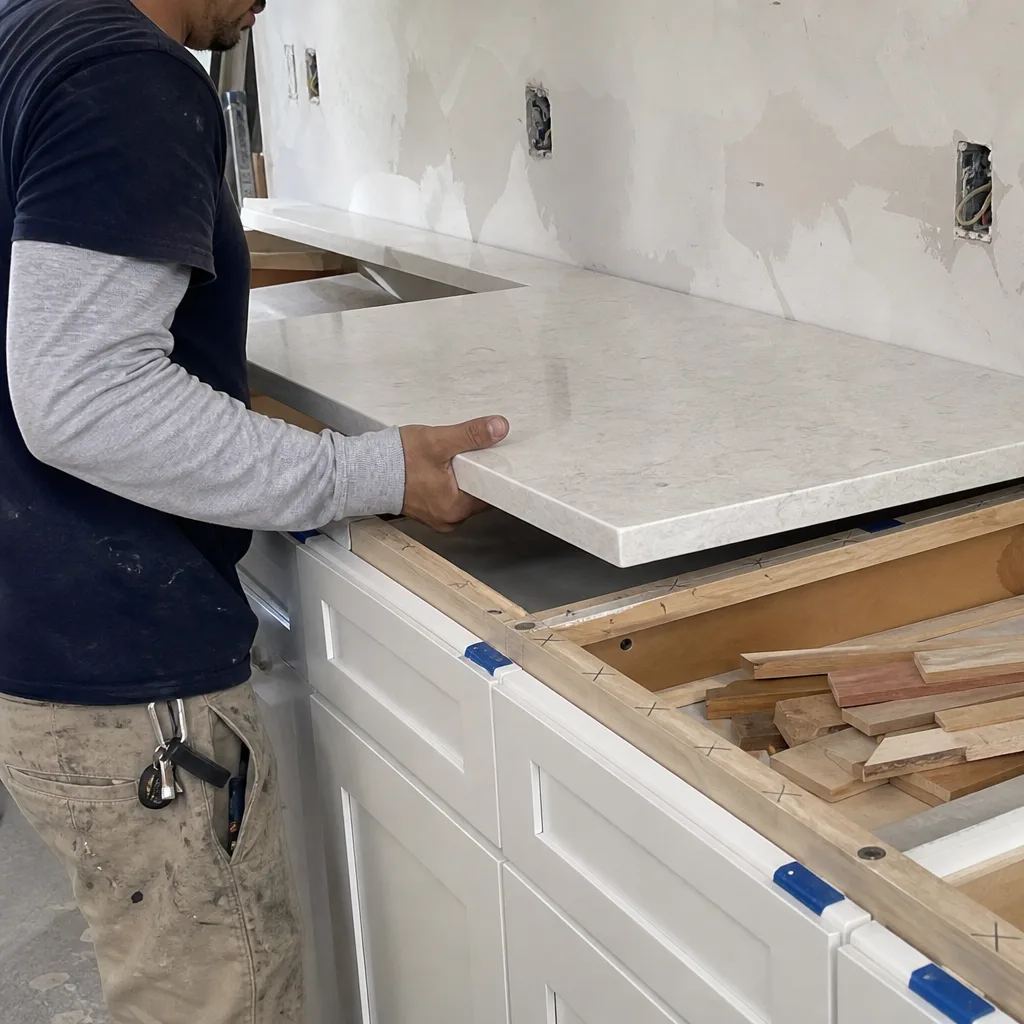
Not all stone behaves the same in 75% relative humidity, and not all “quartz” means the same thing. We’ve replaced countertops in Miami kitchens that failed at year four because the original specification prioritized appearance over porosity in a climate where moisture never really leaves the air.
Materials We Specify for Humidity Resilience
Quartzite (natural stone, not engineered quartz): Harder than granite, lower porosity than marble. We seal it at installation with a 15-year fluoropolymer and reseal at year five in Miami conditions. Brands like Cambria (engineered quartz, not quartzite) and Caesarstone offer consistent performance with essentially zero porosity - the resin binder fills all voids. These materials don’t absorb humidity, so they don’t support the microbial growth we’ve seen on more porous surfaces in unventilated Miami kitchens.
Porcelain slab: Fired at 2,200°F, porcelain has near-zero water absorption (0.5% or less). It’s the material we specify for clients within two blocks of Biscayne Bay or the Intracoastal, where salt air accelerates everything. The surface is UV-stable, so kitchens with southern exposure won’t show the fading we’ve documented on some resin-based materials after five years.
Sealed concrete: Only with a penetrating lithium-silicate densifier and topical urethane seal. Unsealed concrete in Miami’s humidity wicks moisture from the air and develops efflorescence - white mineral deposits - within months. Properly sealed, it’s durable and repairable, but the seal requires reapplication every 3-4 years, not the 10-year intervals sometimes claimed.
Materials Requiring Quarterly Maintenance in Miami
Certain marbles (Carrara, Calacatta, Statuario): These are calcium carbonate, acid-reactive and moderately porous. In Miami’s humidity, etching from citrus or vinegar combines with moisture absorption to create a dull, stained appearance faster than in drier climates. Quarterly sealing with a penetrating stone enhancer is the minimum; monthly application of a marble-specific polish prevents the etching progression we’ve documented in Rowan Construction Group Miami home warranty calls.
Unsealed limestone and travertine: These are essentially too porous for Miami kitchen use without modification. We’ve seen unsealed travertine absorb cooking oil splatter permanently within the first month. If you have these materials, treat them as a maintenance commitment, not a finished surface.
Cost Comparison: Maintenance Versus Replacement
| Material | Annual Maintenance Cost | Replacement Cost (Typical Miami Kitchen) |
|---|---|---|
| Engineered quartz (Cambria, Caesarstone) | $0-$75 (cleaner only) | $4,500-$8,000 |
| Quartzite (sealed) | $150-$250 (reseal every 5 years) | $5,000-$9,500 |
| Porcelain slab | $0-$50 (cleaner only) | $5,500-$10,000 |
| Sealed concrete | $200-$400 (reseal every 3-4 years) | $3,500-$6,500 |
| Marble (quarterly seal) | $300-$500 (professional seal) | $5,000-$9,000 |
| Unsealed limestone | $600-$1,000 (seal + repair) | $4,000-$7,500 |
How to Verify Your Range Hood Actually Vents Outside
Recirculating range hoods - the ones that pull air through a charcoal filter and blow it back into the kitchen - are specified more often than homeowners realize, especially in condo renovations where ducting to exterior is structurally difficult. In Miami’s humidity, this is a critical failure point. Recirculated air carries cooking moisture and grease particulate back into the kitchen, where it deposits on cabinets, accelerates hardware corrosion, and creates the sticky film that attracts dust and mold spores.
The Simple Verification Test
- Turn the hood to high speed.
- Hold a lightweight ribbon, tissue, or smoke match near the filter surface. The ribbon should pull firmly toward the filter and hold horizontal.
- Go outside and find the wall or roof cap that should correspond to your kitchen location. Have someone hold the hood on high. You should feel distinct airflow from the cap, and the damper should be fully open. If the cap is passive (no airflow felt), your hood is recirculating.
- Check the filter type. Charcoal filters are dark, granular, and replaceable. Metal baffle filters are cleanable and indicate a ducted system. If you see charcoal filters in a hood you believe is ducted, a previous owner may have converted it incorrectly.
Why This Matters in Miami Specifically
A recirculating hood in a Miami kitchen adds 2-4 pints of moisture to the air per day of typical cooking. In a 150-square-foot kitchen with standard 8-foot ceilings, that’s enough to push relative humidity above 70% even with AC running, creating conditions for cabinet swelling, mold growth in grout, and accelerated corrosion of any hardware below 316-grade. We’ve replaced kitchens in Brickell and Edgewater condos where the “vented” hood was recirculating, and the cabinet interiors showed mold at year two.
If your hood is recirculating and you cannot duct to exterior due to building constraints, specify a hood with at least 600 CFM (cubic feet per minute) and change charcoal filters every 60 days in Miami’s humidity, not the 6-month interval on the package. Better yet, upgrade to a downdraft ventilation system if the cooktop location allows - it captures at source and doesn’t compete with the AC’s air distribution.
Hardware Grades and Finish Codes for Salt-Air Kitchens
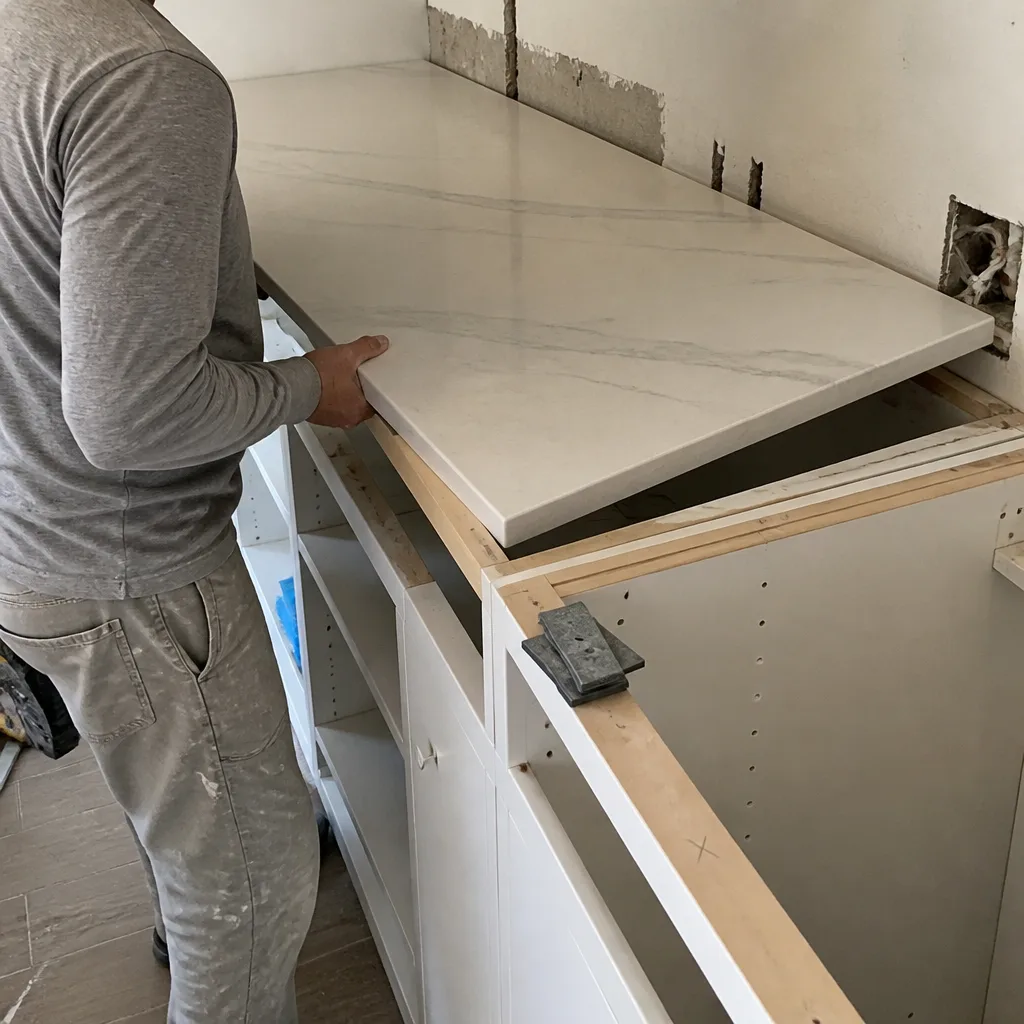
The $4-per-pull difference between 304 and 316 stainless is the cheapest insurance in kitchen specification. Here’s how to read hardware grades and what to specify based on your distance from salt water.
Stainless Steel Grades
| Grade | Chromium/Nickel/Molybdenum | Salt-Air Performance | Approximate Cost Premium |
|---|---|---|---|
| 304 | 18% / 8% / 0% | Surface corrosion in 18-30 months within 3 blocks of water | Baseline |
| 316 (marine) | 16% / 10% / 2% | No visible corrosion at 10+ years in same conditions | $3-$6 per pull |
| 316L | Same, low-carbon | Welded applications; equivalent corrosion resistance | $4-$7 per pull |
The molybdenum in 316 forms a more stable passive layer against chloride attack - that’s the salt in salt air. In neighborhoods like Key Biscayne, Miami Beach, and Coconut Grove, we specify 316 as standard. Inland, past I-95 or west of the Turnpike, 304 is adequate for most applications.
Finish Codes and Their Durability
PVD (Physical Vapor Deposition): A vacuum-deposited coating, typically titanium nitride or zirconium nitride, bonded at the molecular level. PVD finishes on brass or zinc substrates outperform electroplated finishes by a factor of 10 in abrasion and corrosion resistance. We specify PVD for matte black, brushed gold, and gunmetal finishes in Miami - the coating is impermeable to salt air. Cost premium is 15-25% over electroplated equivalents.
Powder-coat over aluminum: Excellent for appliance pulls and oversized hardware. The coating thickness (typically 2-4 mils) provides a barrier even if the substrate is not corrosion-resistant. We’ve seen powder-coated aluminum hardware perform well at 15 years in direct salt-air exposure, provided the coating isn’t chipped.
Electroplated finishes (chrome, nickel, bronze): A thin layer (0.1-0.5 mils) of precious metal over brass or zinc. Any scratch or porosity exposes the substrate to galvanic corrosion in salt air. These finishes require more frequent replacement in Miami kitchens, typically 7-10 years versus 15-20 for PVD or 316 stainless.
Distance-from-Coast Specification Guide
- 0-3 blocks from open water: 316 stainless or PVD-coated hardware only. Brass substrates with any finish other than PVD will show corrosion at 5-7 years.
- 3-10 blocks or across Intracoastal: 316 preferred, 304 acceptable with annual inspection. PVD finishes on any substrate.
- Inland Miami, west of Turnpike: 304 standard, PVD for colored finishes. Electroplated acceptable with 10-year replacement expectation.
Building a Warranty-Preserving Maintenance Log
Most kitchen warranties - cabinet box, hardware, countertop, appliance - require evidence of proper maintenance to remain valid. The manufacturer doesn’t send an inspector; they ask for documentation when you file a claim. A proper log turns “we think it’s defective” into “here’s the maintenance record that proves it’s defective.”
What the Log Contains
We provide every Kitchen Remodeling in Miami client with a project binder that includes manufacturer warranties, care instructions, and a blank maintenance log. Here’s what to record, and when:
- Installation date and crew lead name: Establishes warranty start and installation conditions.
- Monthly entries (first year): Date, inspection item, condition observed, action taken if any, initials of person performing check. Example: “3/15/2025 - Under-sink moisture check - dry - no action - G.R.”
- Photographs with dates: Cabinet interior, hardware condition, countertop surface, caulk joints, under-sink area. Same angles every time for comparison.
- Product-specific maintenance: Grout seal dates and products used. Countertop cleaner brand (some cleaners void warranties - we specify pH-neutral products and note them). Hardware cleaning method.
- Professional service records: Any plumber, electrician, or contractor visit - date, scope, invoice number. This prevents warranty disputes over whether damage was installation-related or subsequent-service-related.
Tasks Homeowners Can Document Versus Contractor Tasks
Homeowner-documented tasks that support warranty claims: moisture checks, hardware operation tests, GFCI tests, visual inspection of caulk and grout, cleaning product used and date.
Contractor-documented tasks that strengthen warranty position: caulk joint replacement (we provide a written scope and photo record), hardware adjustment or replacement under our 365-Day Done Right Promise, countertop resealing with product specification, appliance leveling and connection verification.
Under The Haven Standard, every Rowan visit includes a documented photo record delivered to the customer within 24 hours - not as an upgrade, but as Clause 1 documentation discipline. When a warranty claim arises, our customers have dated, geotagged evidence of installation condition and any subsequent service.
What Prevention Costs Versus Replacement
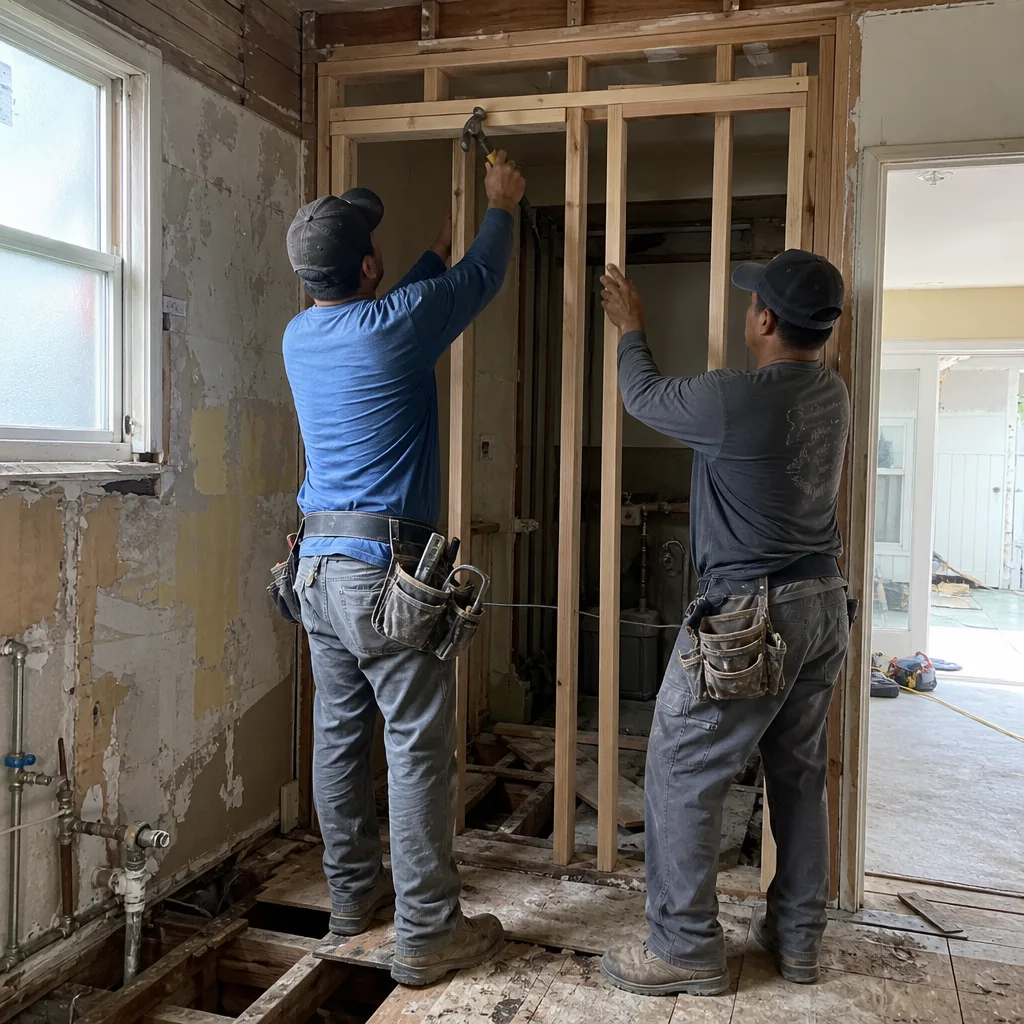
The maintenance schedule above isn’t free, but it’s trivial compared to the replacement costs it prevents. Here’s the math for a typical 10×12 Miami kitchen remodeled at mid-range specification:
| Prevention Item | Annual Cost (DIY or Pro) | Failure Cost if Neglected |
|---|---|---|
| Grout resealing (DIY kit) | $40-$80 | $800-$1,500 (regrout or retile backsplash) |
| Caulk joint maintenance (pro, every 2 years) | $200-$350 | $2,500-$5,000 (water damage to cabinet box, subfloor) |
| Hardware upgrade to 316 stainless (at remodel) | $150-$300 total premium | $400-$800 (replacement at 3 years, plus finish matching) |
| Range hood verification and upgrade if recirculating | $150-$300 (verification); $1,200-$2,500 (ducted upgrade) | $3,000-$6,000 (cabinet refinishing, mold remediation) |
| Countertop resealing (pro, quartzite) | $200-$350 every 5 years | $5,000-$9,500 (full replacement) |
| Annual appliance leveling and connection check | $0 (DIY) or $150 (pro) | $800-$2,000 (water line failure, compressor damage) |
The pattern is consistent: prevention costs 5-10% of failure cost, and the prevention is scheduled, predictable, and budgetable. For seasonal construction care in Miami: a year-round homeowner’s guide to timing these tasks. Failure is emergency-driven, disruptive, and often involves collateral damage to adjacent materials.
For homeowners who bought at peak Miami prices between 2015 and 2025, this math is particularly relevant. Your kitchen is a significant percentage of home value, and its condition affects resale in a market where buyers inspect carefully. A maintenance log with documented care is a transferable asset at sale - we’ve had sellers in Pinecrest and Coral Gables use their Rowan project binders as selling points.
Common Mistakes to Avoid
- Using vinegar-based cleaners on natural stone or grout. The acid etches calcium-based materials and degrades grout sealers. In Miami’s humidity, the damage accelerates because the surface never fully dries between cleanings. We specify pH-neutral cleaners and note the brand in every project binder.
- Assuming “stainless steel” means corrosion-proof. Grade 304 stains in salt air; the name describes stain resistance, not immunity. We’ve replaced 304 hardware at year three in waterfront Miami kitchens where 316 would have lasted indefinitely.
- Ignoring the under-sink cabinet floor. This is the most common failure point we see in warranty calls. A slow drip from a P-trap nut, invisible from above, destroys the cabinet base in 6-12 months. The fix is a $2 washer; the replacement is a $400 cabinet base or $2,500 full cabinet.
- Specifying recirculating hoods to save ducting cost. The savings are $800-$1,500 on a typical Miami kitchen. The cost is accelerated cabinet and hardware degradation, persistent kitchen humidity, and the health effects of recirculated cooking particulate. Duct to exterior if structurally possible.
- Skipping the 72-hour material acclimation period. Cabinets installed directly from climate-controlled warehouse to Miami job site will expand and contract dramatically in the first weeks. We condition all materials on site for 72 hours before installation - a Haven Standard requirement that prevents the face-frame gaps and door misalignment we see in rushed jobs.
- Using generic maintenance schedules from national publications. A kitchen in Phoenix or Minneapolis faces entirely different stressors. Miami’s combination of salt air, high humidity, intense UV, and temperature cycling requires more frequent inspection of seals, faster hardware corrosion monitoring, and specific material grades that national guides don’t address.
When to Call a Professional
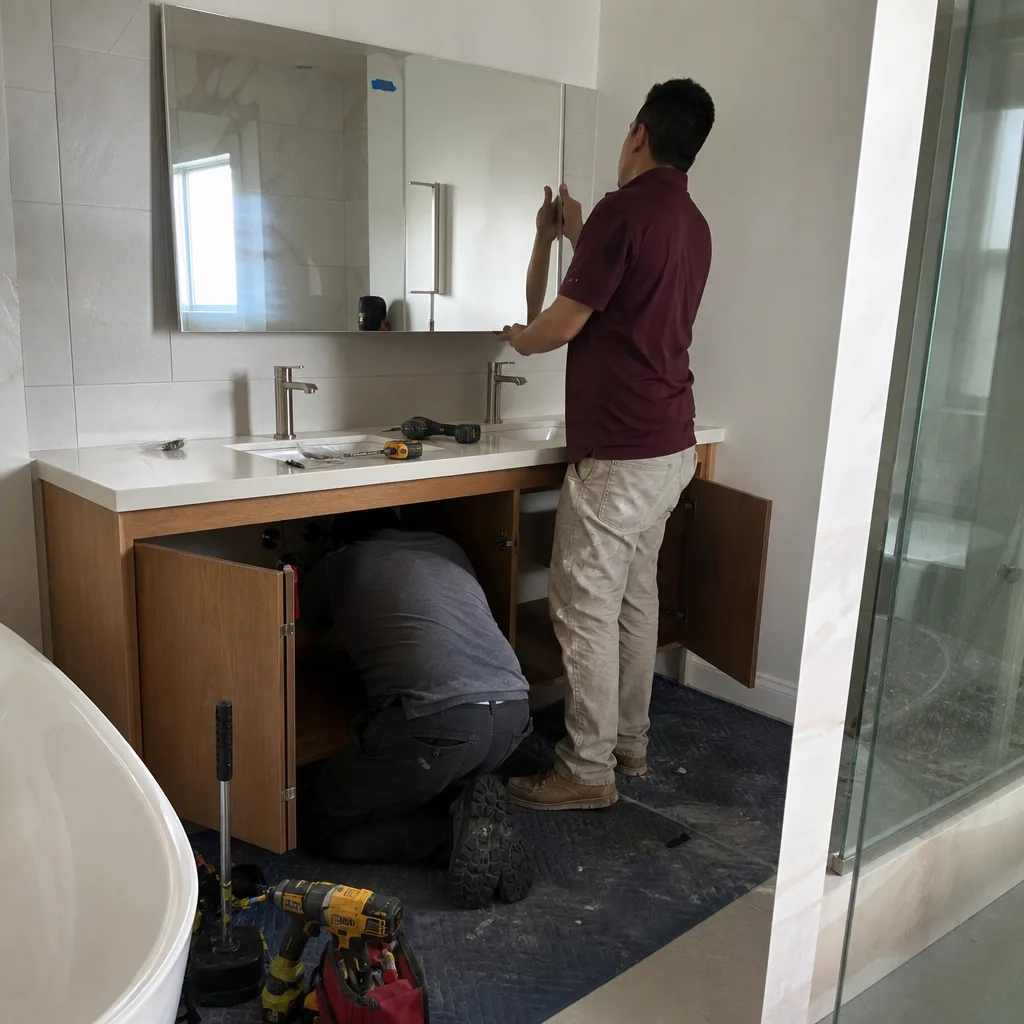
Some maintenance tasks cross into licensed trade work, and some symptoms indicate installation or material defects that should be covered under warranty or our 365-Day Done Right Promise. Call a professional when you observe: water staining that reappears after cleaning (indicates active leak, not surface moisture); cabinet doors that won’t hold adjustment after two attempts (indicates hinge failure or cabinet box distortion); countertop cracks or separations at seams (structural issue, not maintenance); electrical outlets that trip repeatedly or feel warm (safety hazard); range hood airflow that has decreased significantly since installation (duct obstruction or fan failure); or hardware corrosion that progresses despite cleaning (material defect or grade mis-specification).
Rowan Construction Group Miami offers free estimates in Miami - call (786) 321-4970. We also provide our Free Second Opinion on any written estimate from another contractor, reviewing line by line at no charge. Every visit includes a documented photo record, and our 365-Day Done Right Promise means if it’s not done right, we make it right - backed by The Haven Standard, not a handshake.
Frequently Asked Questions
For a typical 10×12 kitchen with mid-grade materials, budget $300-$600 annually for the first five years, covering DIY supplies, professional resealing, and minor adjustments. High-end materials like marble or unsealed concrete push this to $800-$1,200. Engineered quartz and porcelain slab drop it to $100-$200. Call (786) 321-4970 for an exact quote on your specific materials - estimates are free.
No. Under Clause 1 of The Haven Standard, the price is written before any work starts, every time. No change proceeds without a signed change order. This discipline is why our projects finish within a few percent of the agreed cost across 4,000-plus jobs. If we find additional needs during a maintenance visit, we quote them separately and require your signature before proceeding.
Test annually with the water-bead method; reseal when water no longer beads on the surface. In practice, most Miami kitchens need resealing every 12-18 months for cementitious grout, every 3-5 years for epoxy grout. Backsplashes behind gas cooktops, where grease combines with humidity, may need more frequent attention. We specify and document the sealer product at installation so you can match it.
No. Stainless steel cleaners often contain mineral oil that leaves a film on PVD or powder-coat finishes. PVD finishes need only mild soap and water; abrasive cleaners or solvents will damage the coating. We include a finish-specific care card with every hardware specification. Using the wrong cleaner voids most manufacturer warranties - another reason to maintain the log.
Maintenance tasks like resealing, cleaning, and hardware adjustment don’t require permits. Structural modifications, electrical work, or plumbing changes do. We pull all required permits and schedule inspections for any work that crosses that line, with permit numbers documented in your project file. If another contractor suggests skipping permits for “minor” work, get our Free Second Opinion - we’ll review their scope and tell you what’s actually required.
With proper material specification and disciplined maintenance, 20-25 years for cabinets, 15-20 for countertops, 10-15 for appliances, and indefinite for properly ducted ventilation. Without maintenance, we’ve seen kitchens require significant intervention at 8-12 years in Miami’s climate. The difference is almost entirely in the maintenance, not the initial quality - though specifying the right materials for salt air gives you a much wider margin for error.
The Bottom Line
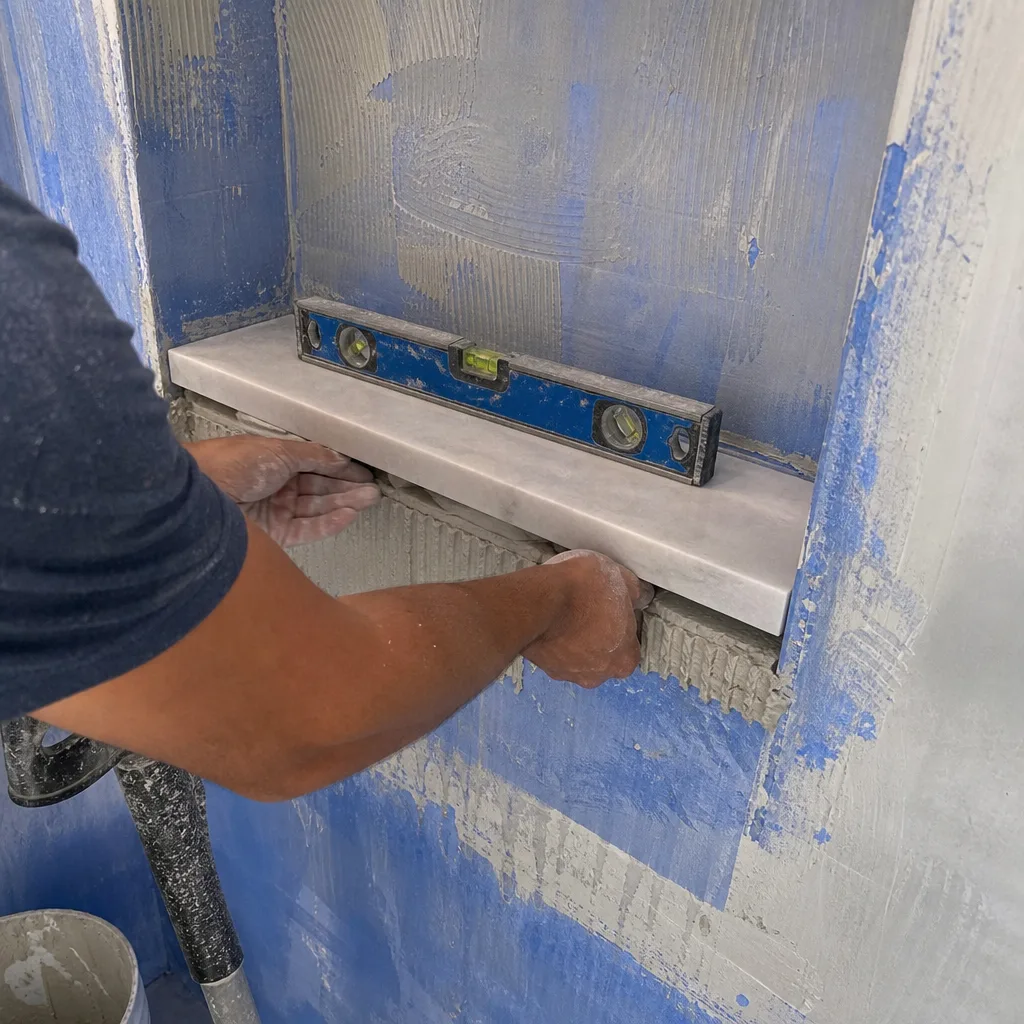
A kitchen remodel in Miami enters a maintenance cycle the day installation ends, driven by salt-air corrosion, humidity absorption, and UV degradation that generic maintenance advice doesn’t address. The homeowners who protect their investment follow a month-by-month first-year schedule, specify 316-grade hardware and PVD finishes if they’re near the water, verify that their range hood actually vents outside, and maintain a written log with photographs. These habits cost a few hundred dollars annually and prevent failures that run to thousands. The materials matter, but the discipline matters more - and the discipline is what The Haven Standard was built to deliver. For more guides & resources on protecting your Miami home, explore our blog.
Written by Grant Rowan, Owner at Rowan Construction Group Miami, serving Miami since 2007.